Tuesday, January 27, 2009

Club 647

One City, One Month

Destination: Buenos Aires

Travel Dates: January 5th – February 5th


Restaurant Review: Club 647

In which our heroine and her valiant beau have a romantic, candlelight dinner.


In an effort to erase our experience at La Riol, Oscar and I choose our next restaurant based on Conde Nast’s 2008 Latin American Hot List. Club 647 is located at 647 Tacuari, somewhat removed from the more down-town bustle of San Telmo. My valiant beau and I walked past the club twice without noticing it. The restaurant is inconspicuously located behind a drab concrete wall and a black metal door that looks not unlike the back entrance of a warehouse. At around 8 p.m. the black door is lifted to reveal velvet ropes, a security guard, and the name of the club in illuminated red numbers.


The interior of the club is dark and swanky with high ceilings and sparkling chandeliers. Most of the walls in the restaurant are covered with gold-scribbled mirrors. Table linens and upholstery are decorated in red and black. Velvet sofas at the back of the restaurant are scattered with shiny pillows covered in Asian embroidery. Candles flicker on every table and old Billie Holiday tunes play softly in the background.


On the web-site, the restaurant recommends making a reservation, but when my valiant beau and I arrived at 8:00 p.m. (an hour ahead of most traditional Buenos Aires diners) we were the only customers. Most of our fellow diners lingered in around 9:00 p.m. and appeared to be well-dressed tourists who, apparently, had also researched the Conde Nast Hot List. Despite the fact that it was a Friday evening, the dinner crowd was scattered and many available tables remained.


Supposedly, Club 647 is renowned for their cocktails. I followed the waiter’s recommendation and ordered a cocktail entitled Bold As Love. It was prepared with Pisco, lemon juice and Boldo Syrup. I enjoyed my drink, but I really enjoyed the drink chosen by my valiant beau. He selected a Dell’Bonnette Flute made with Cinnamon Rum, Absinthe and Dubonnet Rouge. In fact, we both liked it so much, we ordered a second one.


When it came time to begin our meal, we selected a Pear and Goat Cheese Tarte Tartin which was served with a delicate salad of arugula and endive. The sweet flavor of the pear mingled perfectly with the tartness of the endive and the cheese was light and creamy. Positively scrumptious. Price: AR $39, US $11.28


I chose to follow up the appetizer with the Grilled Pink Salmon with Braised Endives, Grappa, and Saffron Foam. The fish was moist and flaky, and the saffron foam and the endive complemented each other beautifully, but overall, the dish was a little salty for my taste. Price: AR $65, US $18.80


My valiant beau decided to embrace the full Argentinean dining experience and ordered a big hunk of beef, identified on the 647 menu as a Rib Eye Served with Potatoes and Mushrooms. He had been advised ahead of time that when asking for a medium-cooked steak, it is best to use the phrase al punto. Apparently this was good advice; my valiant beau reported that his steak was juicy and flavorful; cooked the way he liked it. Price: AR $65, US $18.80


For desert we chose the Cocoa and Almond Meringue with Milk Chocolate Cream and Kumquat Compote. We enjoyed the decadence of the milk chocolate cream, but felt there was an insufficient amount of it to off-set the larger amount of dry meringue. The desert was tasty, but overall, the most disappointing part of our meal. We would have been better off ordering another pear and goat cheese tarte. Price: AR $25.00, US $7.23


City Girl Recommendation: Lovely atmosphere with tasty, but pricey food. Still dreaming about that tarte.


More information on Club 647 can be found at www.club647.com

The Gardens


One City, One Month

Destination: Buenos Aires

Travel Dates: January 5th – February 5th

Date: January 8, 2009

Travel Journal: The Gardens of Palermo and Another Unfortunate Event

In which our heroine and her valiant beau spend time in dark and verdant spaces.


Buenos Aires in January is hot! The sun is bright and glaring and average temperatures are in the nineties. Excepting a few bent and dusty magnolia trees, San Telmo is not a well-shaded neighborhood. So, my valiant beau and I decided to brave the subway system and travel to someplace a little more shaded and lush.


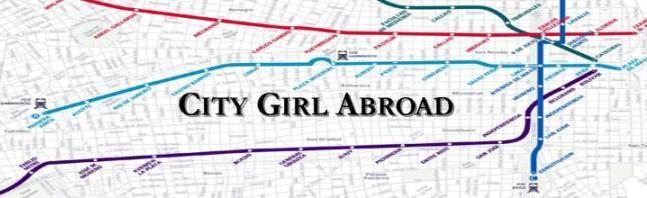
We picked up the C line (blue) at Independencia and transferred to the D line (green) at Diagonal Norte. We got off at Plaza Italiana, directly across from the Botanical Garden in Palermo. Designed by French landscape artist, Charles Thayes in 1898, the Jardin Botanico features a variety of neatly labeled plants and trees from across Argentina. There are several greenhouses, including a delicate Art Neauvu structure with rippled glass windows and curling iron work. Marble and bronze sculptures preside over lily ponds and peek out from groves of trees.


The Botanical Garden is free. Palermo residents sit on park benches, reading books and newspapers and sipping cups of mate. Locals also use the Botanical Gardens as a place to sunbathe. In more sunny parts of the garden women read books in their bikinis or take naps on beach towels spread across the lawns. The Botanical Garden is also home to an impressive amount of feral cats. They tip-toe through the violets and doze at the feet of bronze generals.


Adjacent to the Botanical Garden is the Jardin Zoologico, which is free for children, and therefore positively cluttered with them. From behind the vine-covered walls that obscure the zoo, you can hear the sounds of hundreds of kids, all of them shrieking, laughing, and talking at once. My valiant beau and I decided to pass on the zoo.


We continued walking past the zoo up Avenida Sarmiento and turned left on Avenida del Libertador until we reached the Jardin Japones. This more recently built garden was gifted to the city by its sizeable Japanese community in 1967. Unlike the Jardin Botanico which has something of an overgrown, city park atmosphere, the Jardin Japones is exquisitely maintained. Large ponds filled with greedy koi are criss-crossed with lacquered, red bridges. Slender streams of water bubble over artistically positioned clusters of volcanic rock. At one end of the park is an exhibition of Bonsai trees. Adjacent to the Bonsais is a tea house/restaurant which serves sushi at lunchtime.


Around 4:00 in the afternoon, the teahouse stops serving sushi and offers beverages and a variety of pastries and Japanese deserts. Prices at the café were somewhat expensive, so my valiant beau and I passed on desert and sipped lemonade and melon water. The Jardin Japones also has an ice cream and fast food stand and a garden gift shop with displays a variety of overpriced Asian trinkets which could be more cheaply found in the Chinatown of a large, American city. The Jardin Japonse charges a small entrance fee of 6 pesos a person.


City Girl Recommendation: Both gardens are worth a visit and provide a welcome and restful break from the summer heat.


Travel Tip: Public Transit

When traveling, I am a firm believer in public transit. Not only is it a cheap and convenient way to get around, it is also a great way to see a city. For example, for a mere $0.90 pesos, our eventful 92 bus winds through La Boca, passes through San Telmo, and gives you an excellent view of Plaza del Mayo and all the government buildings.

Buenos Aires has an excellent subway system. Argentenians refer to their subway as the Subte. And for a mere $1.10 pesos, you can travel all over the city. The subway system uses paper tickets instead of tokens. (Interestingly enough, most Subte tickets are also discount coupons for McDonalds). In order to pass through the turn-style you need to collect your ticket from the automated slot. It doesn’t activate until the ticket is retrieved.


Subway stops are numerous and frequent and many Buenos Aires residents do not own cars. There is no charge for subway transfers and transfer points are well labeled. It’s important to note however that although titles and signs are colored-coordinated to the appropriate subway line, the subway cars themselves are not. Yellow cars pull up at the green line, green cars pull up at the red line.


All subway directions are identified by their last stop. On the green line, for example, you’re either traveling toward Cathedral or toward Congreso de Tucuman. In front of each Subte entrance is an enormous city map which overlays the Subte map over an intricately labeled street map of the city, so it’s easy to double check your destination.


Another Unfortunate Event: Iglesia San Ignacio de Loyola


On the way to the gardens, my valiant beau and I decided to stop in at a church to offer up our thanks for a safe journey. We chose San Ignacio de Loyola, an old, reputable-looking Catholic Church with ornate side altars. After a few moments of prayer near the front of the church, we wandered down the dimly-lit side altars and stared up at morose statues of saints. In the last of the side altars, near the exit to the church, we were approached by a heavy-set man in his fifties with a huge tumor at the side of his stomach. He lifted up his shirt to show us the growth beneath his skin and gruffly asked for money. My valiant beau and I refused him. As I began walking toward the exit, the afflicted gentleman cornered my valiant beau in the altar alcove. He showed him a newspaper wrapped around a knife and pointed it at him. “Trust me,” he said, gesturing with the newspaper, “God will pay you for this.”


My valiant beau wisely reconsidered our decision not to make a donation to the gentleman’s recovery and gave him the 5 pesos he had been keeping in his pocket for the beggars at the church entrance. Upon receiving the money, the gentleman put down his newspaper and left. My valiant beau emerged from the dimly-lit church alcove with grisly, traveling story to tell me.


Lesson Learned: Don’t lurk about in dark corners.

Tuesday, January 20, 2009

A Series of Unfortunate Events


One City, One Month
Destination: Buenos Aires

Travel Dates: January 5th – February 5th

Date: January 7, 2009


Travel Journal: A Series of Unfortunate Events

In which our heroine and her valiant beau visit an underwhelming museum, see a Soccer Stadium, meander through a tourist trap, get in a bus accident, and eat at a very poor restaurant.

Unfortunate Event # 1--The Museo Historico Nacional

Upon arriving in Buenos Aires, my valiant beau and I decided to familiarize ourselves with local history and visit the birthplace of the tango. Around 3 o’ clock in the afternoon we headed out to The Museo Historico Nacional. Located next to Parque Lezama at Defensa 1600, The Museo Historico Nacional is a vivid pink building frosted with white, art nouveau plaster curls. In front of the museum is a shaded courtyard cluttered with canons and a couple of concrete lions. An exterior wall near the entrance displays a vast array of complimentary brass plaques.

Despite the rows of commendations, the museum itself was rather disappointing. Although some guidebooks claim there are 30 exhibition rooms, available to the summer visitor was only 5 or 6 rooms which loosely summarized the history of Argentina’s 16th through 19th centuries. Entire decades of history were condensed to a few paragraphs of text and illustrated by only two or three historical artifacts: a photograph, a pistol, a military uniform, etc. The museum had scant mention of the indigenous peoples of Argentina, the gaucho culture of the Pampas, the Peron administration, or the oppressive military dictatorship of the 1970’s.

City Girl Recommendation: Skip it.

La Bombonera

After our anti-climatic museum excursion, my valiant beau and I cut across Parque Lezama and walked down Avenida Almirante Brown until we were in the barrio of La Boca, best known for its famous soccer team the Boca Juniors. Team colors for the Boca Juniors are blue and yellow, and as we turned right on Calle Brandsen and came closer to the Soccer Stadium, entire apartment buildings were painted in painted in flamboyant blue and yellow patterns. The stadium itself is named La Bombonera (the chocolate box) but is also painted blue and yellow. Footprints of famous soccer players are perpetually embossed into the concrete of the sidewalk perimeter around the stadium.

The Soccer Stadium has a museum, Museo de la Passion Boquense, in honor of its famous soccer team. At the museum entrance is a very high priced gift shop which sells everything from Boca Juniors caps and jerseys to Boca Juniors thong underwear and shoelaces. Beyond the gift shop is a statue of Diego Maradona. In order to take your photograph with the statue, you need to stand in line. My valiant beau and I both stood in line and took the requisite photo, but we decided to bypass the complete museum tour.

For a reduced rate of fifteen pesos, we choose the Express Tour. This tour allows you to bypass the museum and head straight to the stadium, which has three tiers of alternate blue and yellow seating. Some stadium areas are standing room only, and the front row seats along the middle of the field are a mere six inches away from a very tall, very thick, plexi-glass wall. The interior walls of the stadium are entirely covered with scribbled messages of graffiti, most of them extolling the near divine virtues of the Boca Juniors. The Express Tour also allows you to take a photograph with Argentina’s World Cup trophy.

City Girl Recommendation: Soccer fans will love it.

We turned left on Calle del Valle Iberlucea and eventually came to the famed El Caminito, a short cobblestone street lined with historic buildings and corrugated tin houses painted in a bright, whimsical array of rainbow colors. El Caminito dead-ends at the Riachulo River, once the main port of Buenos Aires. Supposedly, Italian immigrants who came to Argentina in the late 1800’s decorated their houses with left-over cans of paint taken from the harbor.

El Caminito is strictly a pedestrian walkway. The cobblestone streets are cluttered with make-shift tango stages and overflow patio seating. It is something of a tourist trap with aggressive street vendors selling artwork and mementos. Almost every restaurant has at least one employee handing out pamphlets and pulling out chairs as you walk by and most of the stores along El Caminito sell tourist trinkets and Boca Juniors items. The entire place felt a little like Hollywood Blvd., charming in a tawdry, touristy sort of way, but not worth seeing twice.

City Girl Recommendation—Visit El Caminito only if you’ve got the time.

After wandering about a bit, my valiant beau and I found ourselves at La Perla Café. We snacked on some delicious capresse empanadas (mozzarella, basil, olives, and tomatoes) and a couple of beers (the local Argentinian brand is Quilmes) and did some people watching before deciding that we were too tired to make the long walk home.

Unfortunate Event #3—Bus 92

While dining in La Perla, my valiant beau and I noticed a bus stop in front of the café. After questioning the waitress, we learned that Bus 92 would take us back to San Telmo. We should have inquired how much the bus cost. The bus driver does not collect money and was too preoccupied to explain the large and efficient-looking ticket machine behind him. I left my valiant and more technologically inclined beau to fumble with tickets and monedas and took a seat near the center of the bus.

The bus started abruptly and traveled swiftly until it crashed head-on into a car pulling out of a driveway. My valiant beau was flung forward to the front of the bus, banging his hip along the side of the ticket machine. The bus driver got out of the bus to talk to the other driver. All of the passengers stood up to stare at the dent in the silver car. In a few moments the bus driver returned, and we were back en route. There were no expletives or insurance information exchanged. The bus driver did not inquire about the safety of the passengers. Except for a rather large and purple bruise, my valiant beau was relatively unharmed. In a few minutes it was almost as if the accident had not occurred.

Lesson Learned: Have your monedas ready before getting on the bus.

Unfortunate Event #4—Restaurant La Riol

Wandering around San Telmo after our trip to La Boca, my valiant beau and I decided to dine at one of our many local restaurants. La Riol is located in a beautiful old building on Peru Street. The tables were draped with nice white tablecloths, the prices were economical, and the two Argentinean families inside seemed to be enjoying their meal.

My valiant beau ordered Milanesa Napolitana (thinly breaded topped with tomato sauce, ham, and melted cheese) and I ordered Merluza a la Romana, a lightly breaded white fish. We also ordered a lettuce salad. The salad came up first and was filled with crisp lettuce and fresh wedges of tomato. Unfortunately, it was also filled with three very dirty, very gray pieces of string, which we discovered half-way through the salad.

The waiter brought olive oil and red wine vinegar to flavor the fish and the salad, but again, it was only half-way through the meal that we realized that the small flecks in our bottle of red wine vinegar were not flecks of oregano, but rather very small insects, complete with delicate little legs and translucent wings. We pointed out the insects to our waiter. Making no apologies, he merely nodded and exchanged our bottle of vinegar for that of another diner. Stunned, my valiant beau and I promptly paid the check and left.

City Girl Recommendation: You might want to pass on Restaurant La Riol.

Lesson Learned: Use the Internet, do your restaurant research, and eat only at restaurants that come well-recommended.

Travel Tip: Restaurant Recommendations for Buenos Aires

Below are some links to restaurant recommendations in Buenos Aires. Enjoy!

Try Virtual Tourist for reviews from fellow travelers.

http://www.virtualtourist.com/travel/South_America/Argentina/Distrito_Federal/Buenos_Aires-1541981/Restaurants-Buenos_Aires-TG-C-1.html

Concierge is the web-site for Conde Nast magazine recommendations.

http://www.concierge.com/travelguide/buenosaires/restaurants?pageNumber=1&pageSize=10&resultOffset=1

New York Times Recommendations for Palermo Viejo.

http://travel.nytimes.com/2006/11/19/travel/tmagazine/19buenosaires.html

This last site is in Spanish.

http://www.adondevamos.com/?b4=73&e=b&p=1&z=restau
Monday, January 12, 2009

The Grocery Store


Travel Journal: The Grocery Store

In which our heroine spends 35 dollars on a week’s worth of food.


Supermercados


If you decide to rent an apartment, it will probably come with a well-stocked kitchen: plates, teapot, wine glasses, pots and pans, cooking and table utensils, a microwave, a stove, and if you’re lucky, a dishwasher and a set of spices. Unfortunately, rental apartments do not come with a refrigerator full of food. If you plan to cook during your travels you are going to need to go grocery shopping.


Most grocery stores in San Telmo are owned by Chinese immigrants. Be aware that it can be a little difficult to understand Spanish that is spoken with a blurred Argentinian/Chinese accent. And most grocery stores in San Telmo have very few employees. Usually there is a clerk reading a newspaper and someone else dozing behind the meat and cheese counter. Customers are expected to do their shopping without assistance. The grocery stores in San Telmo range from very tiny closest-sized spaces that sell wilted produce and a large selection of chips, soda, wine, and cheese, to enormous spaces that offer everything you could hope to find. More comprehensive grocery stores are labeled as Supermercados. There are at least three Supermercados of varying sizes on Tecuari street. The largest runs perpendicular to Tecuari on Avenida Independencia.

In addition to the ridiculously low prices, one lovely thing about grocery shopping in Buenos Aires, is the baskets. At the Supermercado on Avenida Independencia, they were bright blue. You either carry them with a looped plastic handle, or drag them on the floor behind you on little wheels.

Yoo-Hoo, I’m a Tourist!

Despite my desire to be an independent woman abroad, I was unable to locate milk without assistance from a store employee. Although I had wandered the aisles many times, I couldn’t seem to find it. So I asked a stock boy, “Do you sell milk?” His answer: “Of course.” He pointed me in the direction of the dairy aisle. I wandered over to the dairy aisle, gave it another precursory glace but was unable to locate the milk.


I returned to the stock boy.


Me: “I couldn’t find it.”

Him (pointing): “It’s over there, below the cheese.”

Me: “I looked, I couldn’t find it.”

Him (sighing): “Let me show you.”

He led me to the dairy aisle, and low and behold, there were little plastic pouches of milk underneath the cheese.

Me: “Oh, it’s in a bag.”

Him: “Yes.”

Me: “What do you do with the milk after you open up the bag?”

Him (looking at me like I’m an idiot): “You pour it in a pitcher.”

Me: “Oh. Thank you.”


When my valiant beau and I returned home from our shopping excursion, I realized that there was an empty glass carafe on a shelf alongside the inner door of the refrigerator. When I cut open the plastic pouch of milk and poured it inside the carafe, it was an exact fit.


Travel Tip: The Benefits of Cooking at Home

One of the benefits of living in an apartment is having a kitchen. Cooking at home is a great way to save money while traveling abroad. Instead of spending money on meals, you can spend your money on trips to the Mendoza Wine Country and Uruguay, or on souvenirs like elegant leather handbags and silver jewelry.

Produce Stands

Supermercados are the best place to go for canned goods and packaged items. But the best place to buy produce in Buenos Aires is at a local produce stand. Produce stands offer prices for fruit and vegetables that are considerably cheaper than those offered at Supermercados. Most of the produce is also of higher quality. At the produce stand closest to our house, we bought fresh lettuce, basil, parsley, peaches, onions, tomatoes, zucchini, carrots, and spinach, all for about U.S. $5.00. However, the largest selection of produce can be found on the San Telmo Mercado alongside Defensa. There are multiple stands to puruse, and many of them sell berries, fresh herbs, and mushrooms in addition to the standard produce offerings of street side stands. The San Telmo Mercado also has stands that sell meat and cheese. We purchase a variety of chorizo and huge, hunk of gouda for around $3.75.

Shopping at both the Supermercado and a produce stand in the San Telmo Market, my valiant beau and I purchased an entire week’s worth of groceries, including 2 bottles of wine, for around $35.00. An average pasta dinner for two, with salad and an excellent bottle of wine, costs approximately $5.00.

Below is a list of San Telmo prices for a variety of basic items in the Supermercado:

Item/Pesos/ U.S. Dollars

Milk/$2.00/$0.58

Cheese/$8.00/$2.32

Butter/$2.45/$0.71

Yogurt/$2.57/$0.74

Eggs/$4.65/$1.34

Pasta/$3.30/$0.95

Ravioli/$4.29/$1.25

Olive Oil/$13.00/$3.77

Vinegar/$10.99/$3.18

Lentils/$4.25/$1.23

Cereal/$10.00/$2.90